← back
How might we provide makers with the ability to connect to other makers for the purpose of reducing waste, building community, and providing a dedicated space to share materials and ideas?
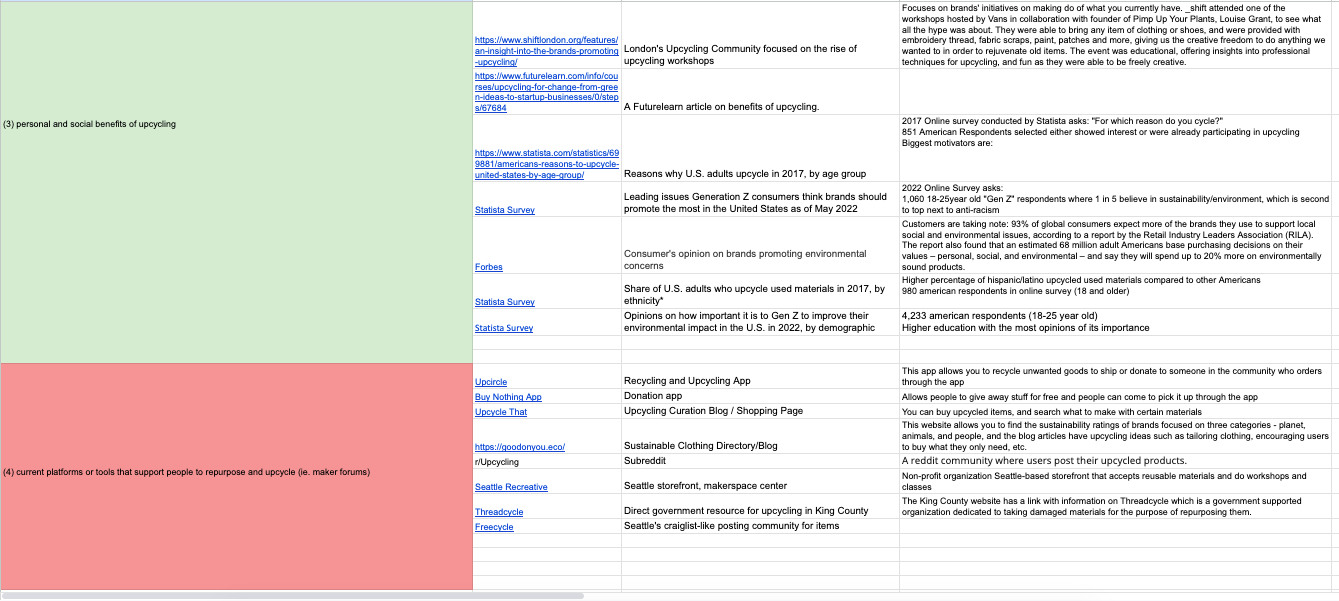
For our primary research, we created personas and picked out a user group to target with our idea: makers who wanted to learn about ways to upcycle and be more sustainable in their craft. My persona as detailed below, is a college student that aims to use recycled materials to create and sell jewelry - a shift towards sustainability many younger makers are focusing on.
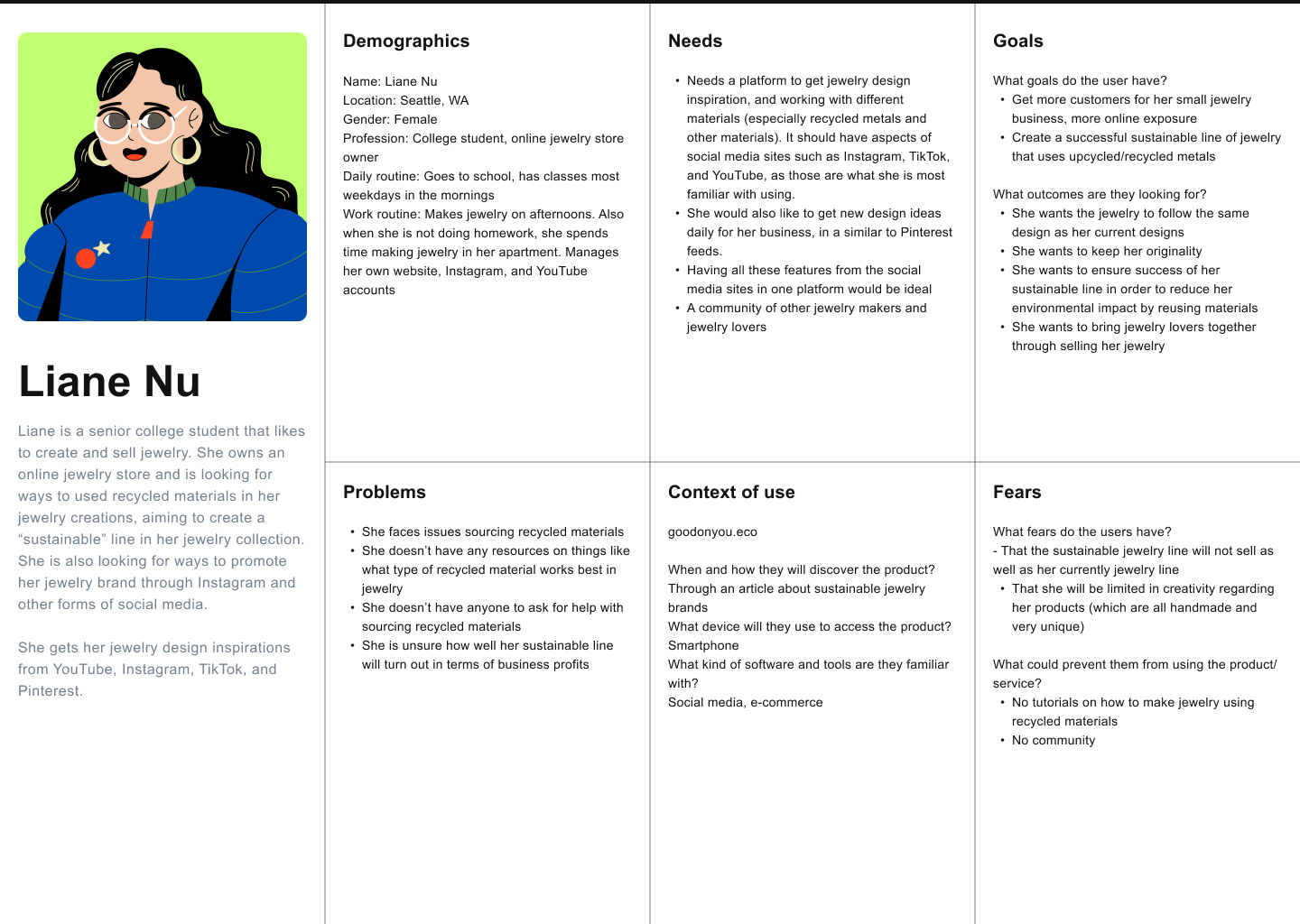

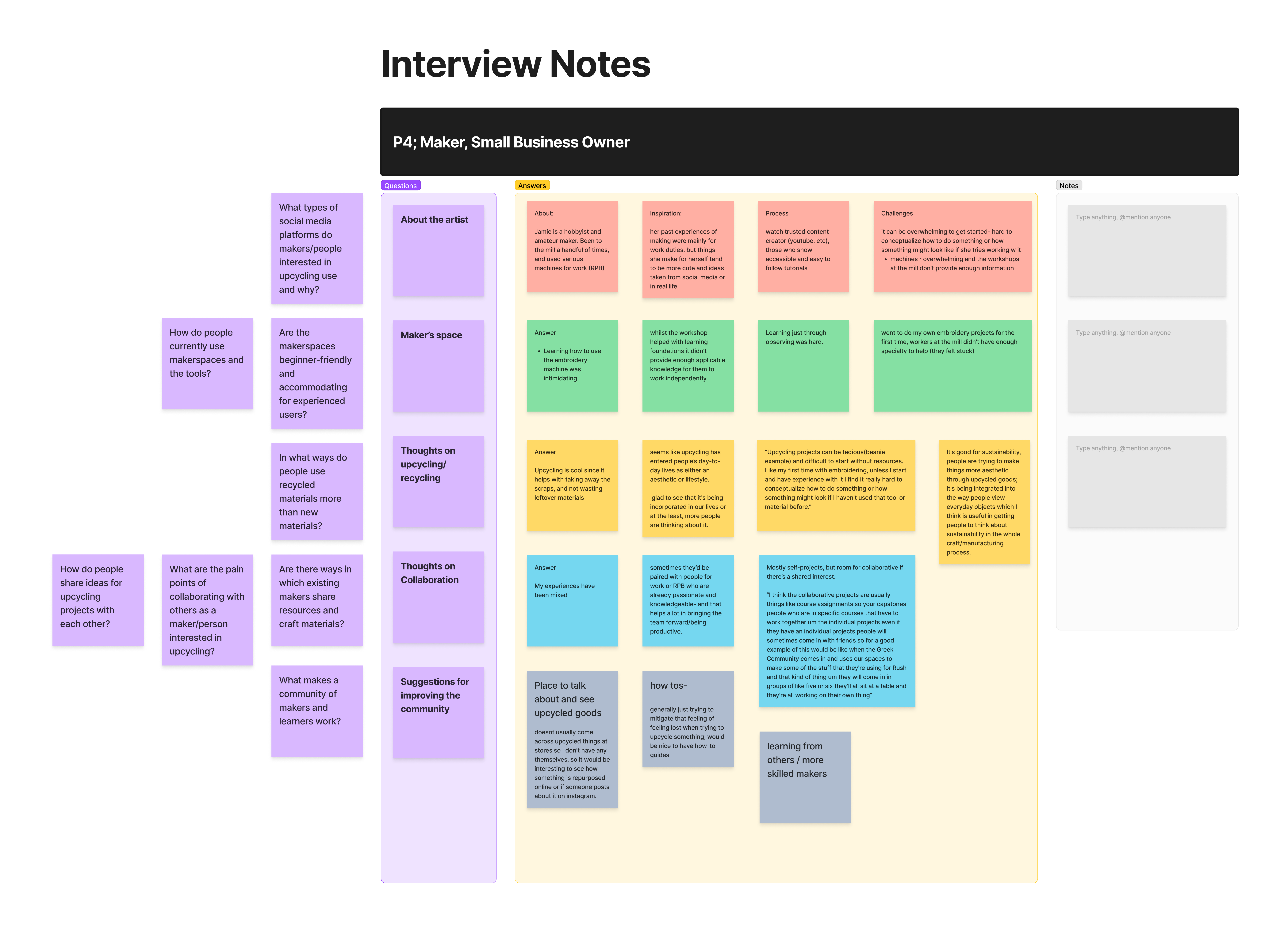
We chose 4 people who had varying degrees of skill in fabrication (and use of upcycled materials) to interview, ranging from "never upcycled" to "expert." From the interview transcripts, we conducted an affinity analysis to find similarities within their responses. In general, they expressed that there was a lack of a makers' community (where they can share ideas and collaborate with others), upcycling was too time-consuming, and that they didn't have enough reputable resources.


Based off what users mentioned their pain points were, the features our non-profit needed were (1) an events page that focused on bringing makers together, (2) a resources page to promote upcycling-related ideas, and (3) a donation information page, which we thought would be valuable in continuing the cycle of giving what would've been trashed goods to others, encouraging them to make something new, essentially helping the planet and our people.
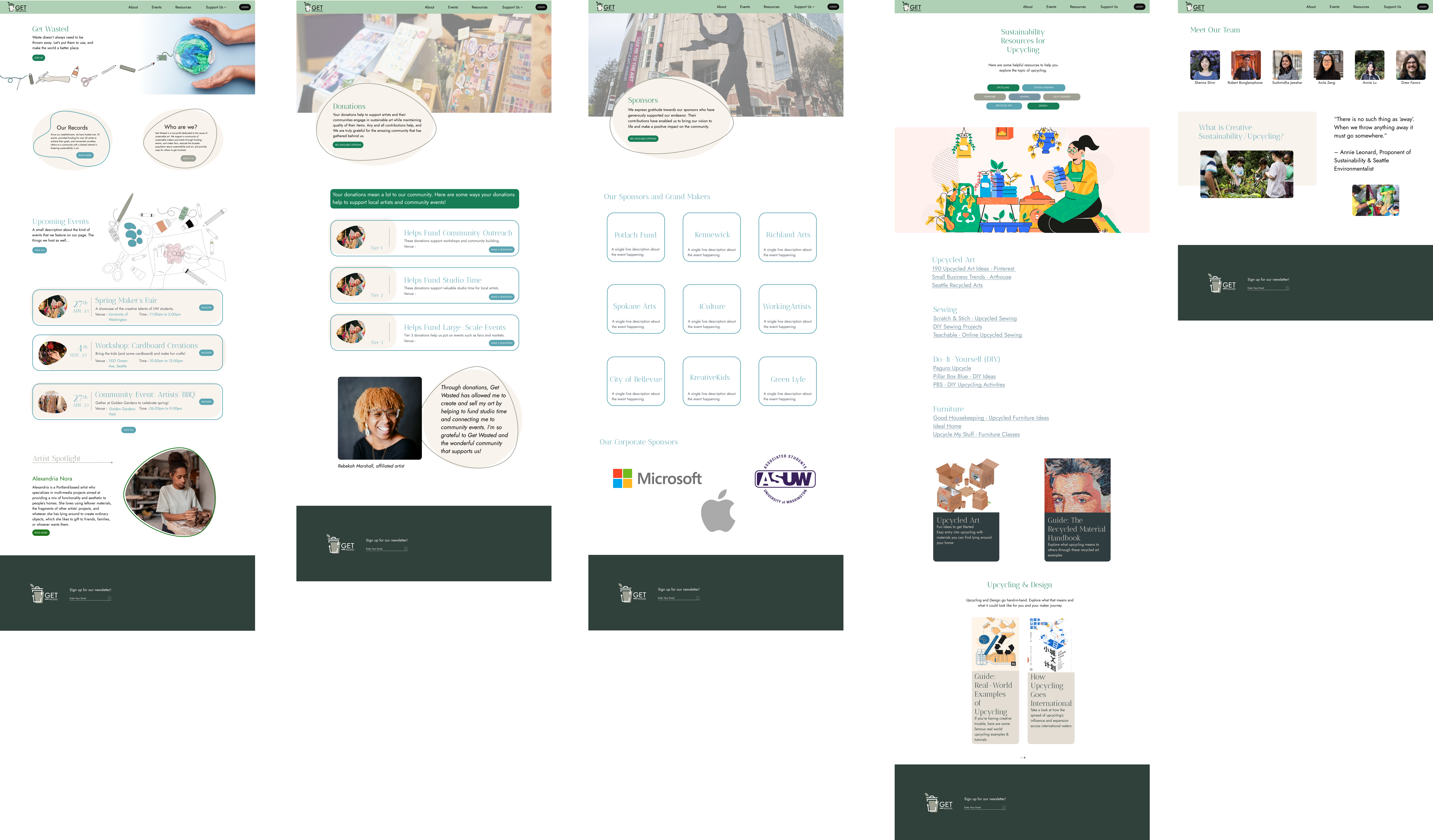
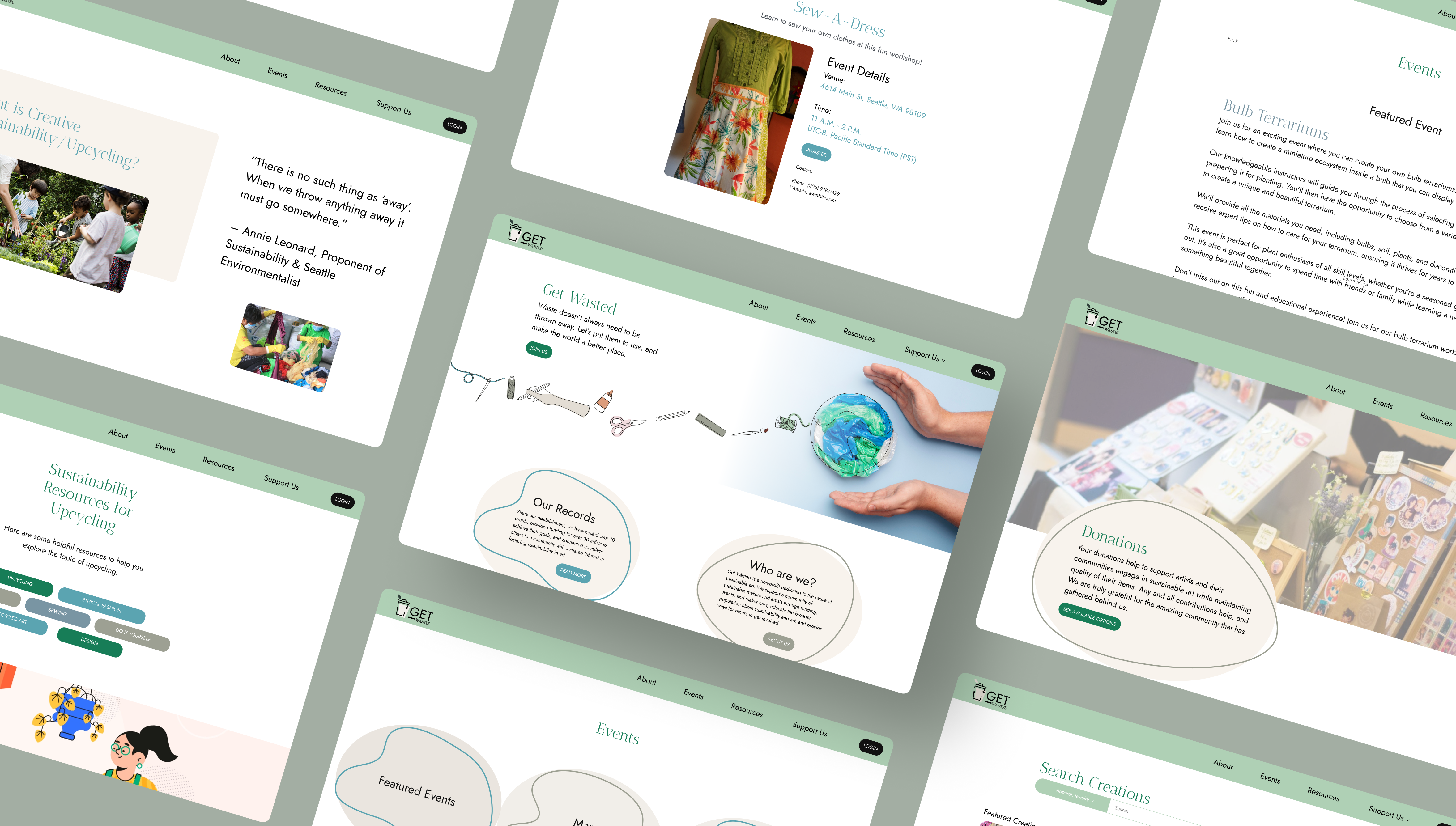
The colors we selected to represent our brand were different shades of green, as we felt the green color really captures the essence of sustainbility. With our non-profit being focused on makers and reusing goods, green tones and earthy typography were nice little accents to bring this message across. We also wanted to ensure our website was welcoming to all no matter their experience level, so we incorporated a lot of fun images and resources for different skill levels.
Our website prototype can be accessed via the "Figma Prototype" button above. Details of our full design process can be found in our presentation.
Get Wasted 🗑🌎
A non-profit website that educates people on sustainable fabrication.
Topics
UX Design • UX Research • Sustainability • Digital FabricationDuration
6 months, 1/2023 - 6/2023Type
Design for America Team ProjectMy Roles
I was in charge of doing User Research (Interviewing, Personas, and Analysis), designing the Visual Design System and Events Flow, and contributing to the Get Wasted Lo-Fi Prototype Website, and Get Wasted Hi-Fi Prototype Website.Problem
In 2018, the U.S. produced 292.4 million tons of trash in 2018, almost tripling the amount produced in 1960. That's about 4.9 pounds of trash per person, per day. The trash collects in landfills, harming our environment, oceans, wildlife, and quality of living. This opens up the question of how we can prevent more damage to our ecosystem in the realm of sustainability.Our Solution
While we can't get rid of all sources of trash, we can choose an area to focus on replacing with sustainable techniques. We created Get Wasted, a non-profit organization that aims to promote sustainable fabrication techniques among makers and non-makers alike. We did this in the form of a website that aims to encourage people to explore the concept of upcycling - making something new out of something that would've been otherwise thrown away, effectively keeping trash out of landfills.Challenges
- Lack of community among makers
- Difficulty sourcing materials (price, no areas to recycle/donate, not having specifics)
- People who are not into the makers' community are not sure where and how to begin
Goals
- Give users access to upcycling inspiration
- Help users find a sense of community such as by connecting them with other makers
- Show users accessible, beginner-friendly resources to encourage them to engage in the practice of upcycling
The Process
Motivated by a desire to live more sustainably, I decided to take part in a design project in the new year. Under the support of our project leader, in the span of 6 months, our team of 6 members managed to turn an idea for a sustainable fabrication non-profit into a design-come-true.1. Problem Statement
While we wanted to design a sustainable solution, we needed to focus in on a specific area. As makers, our team identified three main issues within the realm of fabrication: lack of community, difficulties sourcing materials, and beginners not being sure where to begin. That's where we came up with the design question:How might we provide makers with the ability to connect to other makers for the purpose of reducing waste, building community, and providing a dedicated space to share materials and ideas?
2. Primary/Secondary Research
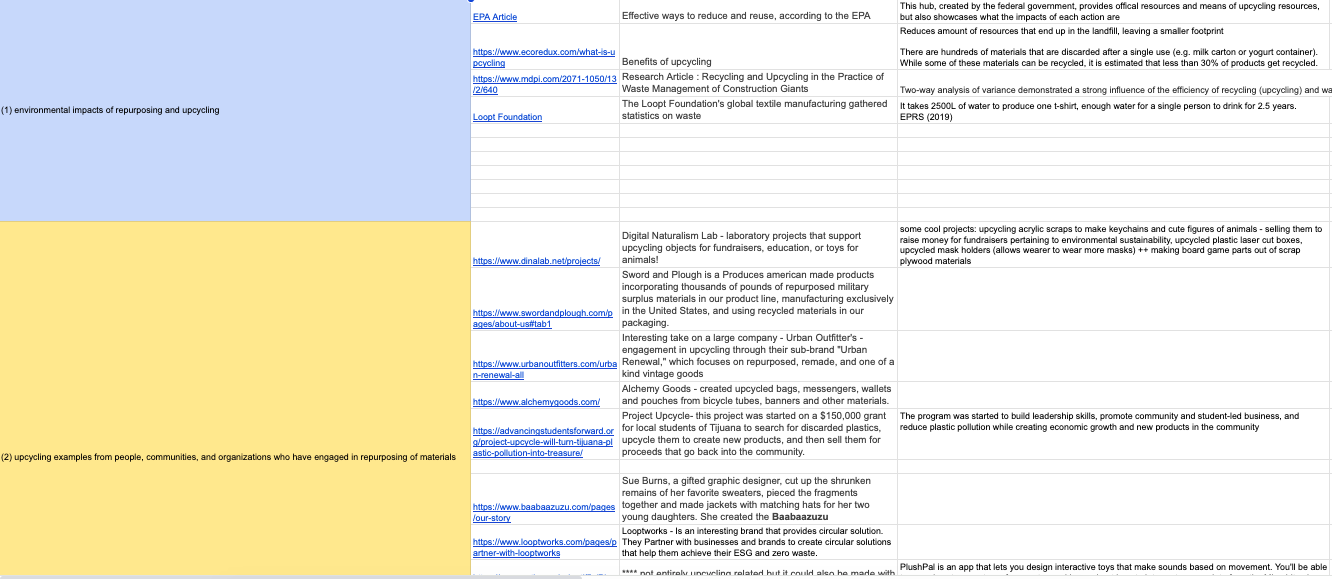
We began by conducting research, in multiple realms. Our secondary research started with us studying 4 domains related to upcycling: environmental impacts, community building, personal and social benefits, and existing platforms. We discovered that many items that end up getting discarded in landfill (rather than reused or upcycled) do great damage to the environment. Techniques such as upcycling can prolong the life of these items, and with a bit of creative thought, turn them into something new, leaving the maker with a great sense of accomplishment as a result. From there, we summarized relevant research, created interview questions, and began finding people to interview.
For our primary research, we created personas and picked out a user group to target with our idea: makers who wanted to learn about ways to upcycle and be more sustainable in their craft. My persona as detailed below, is a college student that aims to use recycled materials to create and sell jewelry - a shift towards sustainability many younger makers are focusing on.
We chose 4 people who had varying degrees of skill in fabrication (and use of upcycled materials) to interview, ranging from "never upcycled" to "expert." From the interview transcripts, we conducted an affinity analysis to find similarities within their responses. In general, they expressed that there was a lack of a makers' community (where they can share ideas and collaborate with others), upcycling was too time-consuming, and that they didn't have enough reputable resources.
3. Ideation
After organizing our interview insights, we needed to come up with a solution to address the makers' desires as discovered previously. We conducted competitive analyses of over non-profit and upcycling-related organizations. Focused on creating long-lasting community over tangible products, we ultimately deciding on building a non-profit organization to educate users on fabrication with upcycled materials. From there, we created an information architecture and visual guides in order to prompt ideas for our website design.
Based off what users mentioned their pain points were, the features our non-profit needed were (1) an events page that focused on bringing makers together, (2) a resources page to promote upcycling-related ideas, and (3) a donation information page, which we thought would be valuable in continuing the cycle of giving what would've been trashed goods to others, encouraging them to make something new, essentially helping the planet and our people.
4. Prototyping
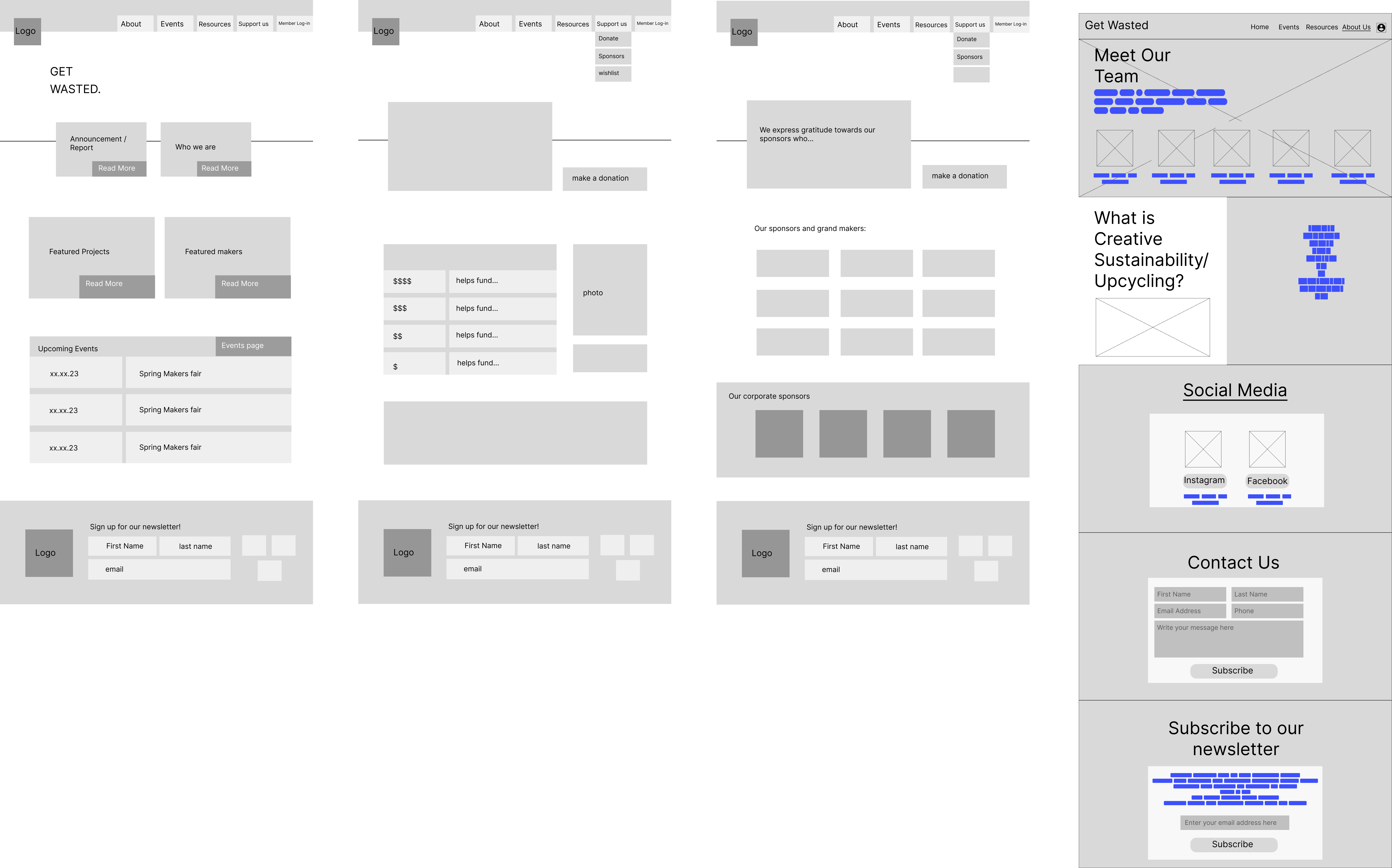
We created a preliminary lo-fi prototype through Figma, which would guide our hi-fi prototype. The lo-fi prototype involved basic placement of images, text boxes, buttons, etc. The hi-fi prototype is where we would refine our color palette and graphics in order to create a website with good visual design and match our organization's theme. We used principles of current website UI design trends of non-profit websites in order to adhere to users' intuitive navigation tendencies.
The colors we selected to represent our brand were different shades of green, as we felt the green color really captures the essence of sustainbility. With our non-profit being focused on makers and reusing goods, green tones and earthy typography were nice little accents to bring this message across. We also wanted to ensure our website was welcoming to all no matter their experience level, so we incorporated a lot of fun images and resources for different skill levels.
5. Fabrication
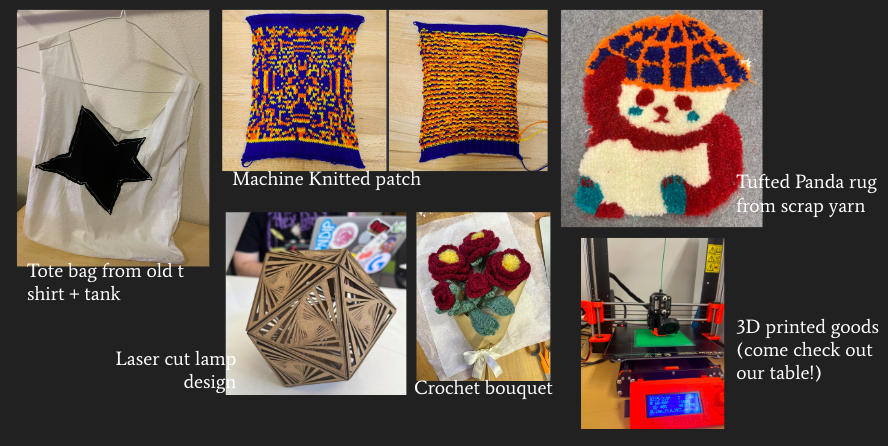
We finished up by having each group member create an item to really showcase the world of sustainable fabrication. I'd sewn a tote bag out of recycled shirts that would've been donated otherwise. This process has taught me that while upcycling an item does take time, the time taken to turn what would've been trash into something new is immensely valuable. Not only have I kept an item out of landfill, but I also managed to "think outside the box" and enjoy the process of learning a new technique throughout.
Our website prototype can be accessed via the "Figma Prototype" button above. Details of our full design process can be found in our presentation.